The Chicago River is an unusually useful place to learn how a city is assembled. Buildings from different periods face one another across a working waterway, streets cross on movable bridges, and lower service levels reveal that the apparent ground plane is only one layer. You do not need an architecture degree to look carefully. Begin with structure, material, proportion, and the relationship between a building and the river.
Start with the bridge
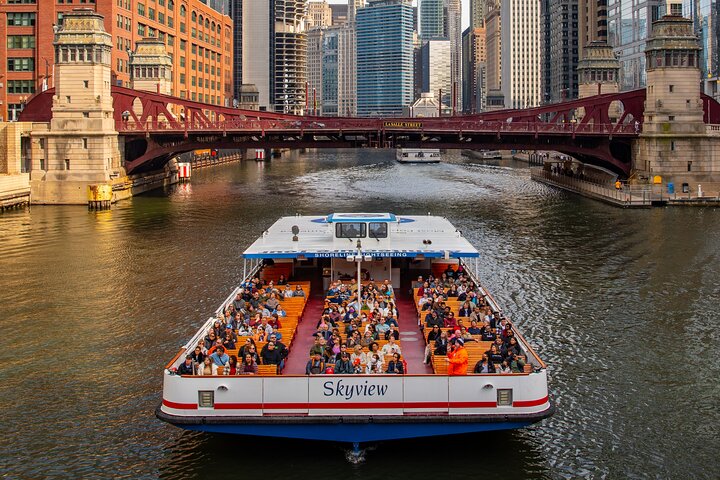
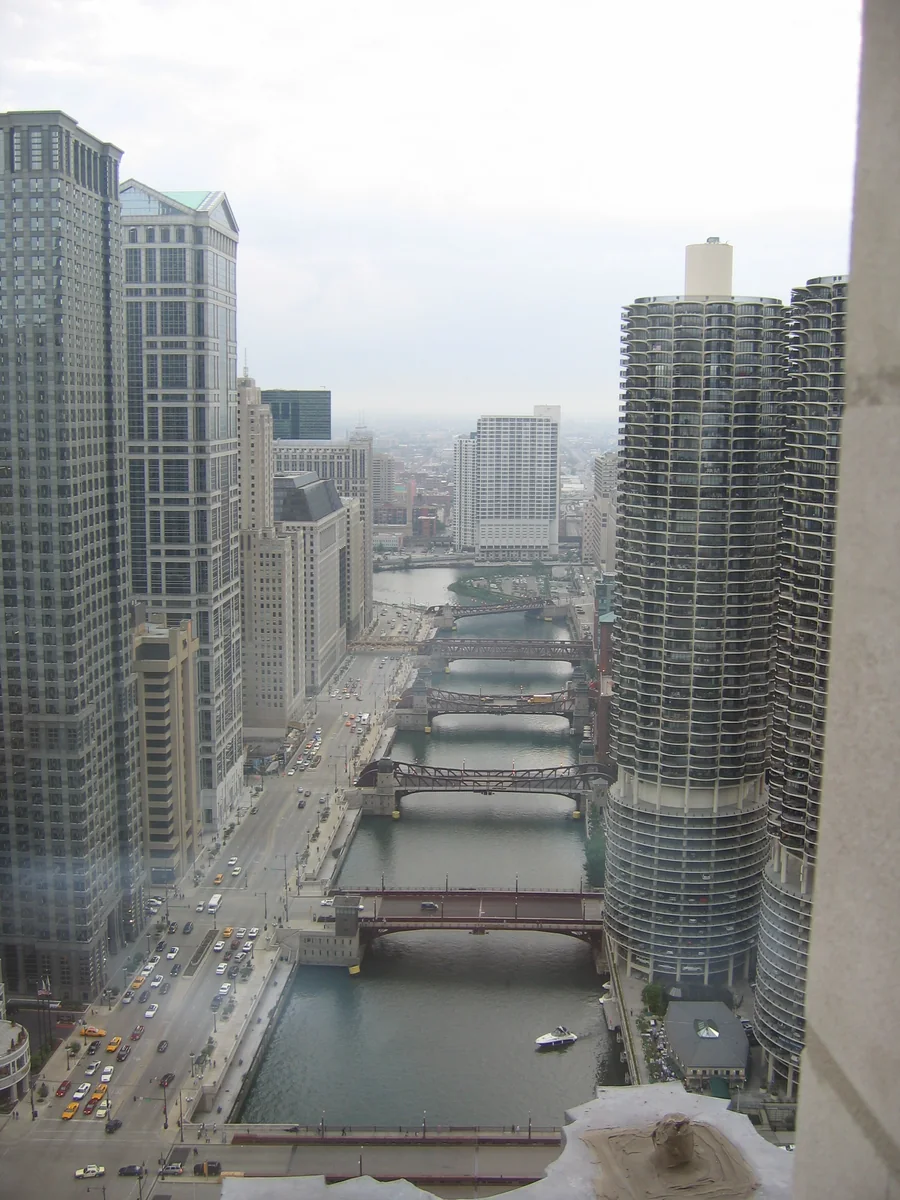
Pause before crossing and look at the bridge house, roadway, railings, machinery enclosures, and the way pedestrians enter the span. Chicago’s movable bridges are infrastructure rather than decoration. They connect the street grid while allowing a navigable river to continue beneath. From the middle of a bridge, compare the river walls, lower walks, street levels, and tower bases. This is often the clearest view of the city’s vertical layers.

Chicago River 90-Minute Architecture Tour
Be inspired by the captivating, visual art that is Chicago’s legendary architecture, and the exceptional architects who created this ever-changing...
Compare building frames
Look for clues about how a facade carries weight. Older masonry buildings often reveal thicker walls and smaller openings. Steel and concrete frames can support larger window bays and different proportions. Modern curtain walls hang a lighter exterior skin from the structure. These are broad observations, not a substitute for a building’s documented history, but they give your eyes a useful question to follow.
Notice the river as public space
The river corridor is also shaped by boats, service access, restaurants, stairs, planting, seating, and pedestrian circulation. A polished photograph can hide those systems. Watch how people enter and leave the lower walk, where shade falls, which edges feel comfortable, and where the route narrows. The best architecture walk connects visual ambition to daily use.

360 CHICAGO Observation Deck Admission
The best views of Chicago can be yours at 360 Chicago Observation Deck! Perched 94 stories above the Windy City in t...

Field Museum of Natural History Admission Tickets
Explore over 40 million artifacts, including SUE, the world’s largest, most complete T. rex ever discovered! Disco...

Museum of Ice Cream Chicago Admission Ticket
Step into a world of color, creativity, and sweetness at the Museum of Ice Cream in Chicago! This immersive, Instagr...
Chicago River 90-Minute Architecture Tour
Be inspired by the captivating, visual art that is Chicago’s legendary architecture, and the exceptional architects who created this ever-changing...
Confirm access rules and tour details with the responsible organization. Keep bridge paths clear, respect private interiors, and use a qualified guide when you want authoritative building histories. Street-level attention is not about collecting facts quickly. It is about seeing why Chicago’s river corridor feels engineered, civic, commercial, and constantly in motion at the same time.

Chicago Lake and River Architecture Tour
An authentic Chicago tradition since 1935, this is the tour that started it all. This unique excursion tells the story of more than 200 years of fasci...
Chicago River 90-Minute Architecture Tour
Be inspired by the captivating, visual art that is Chicago’s legendary architecture, and the exceptional architect...