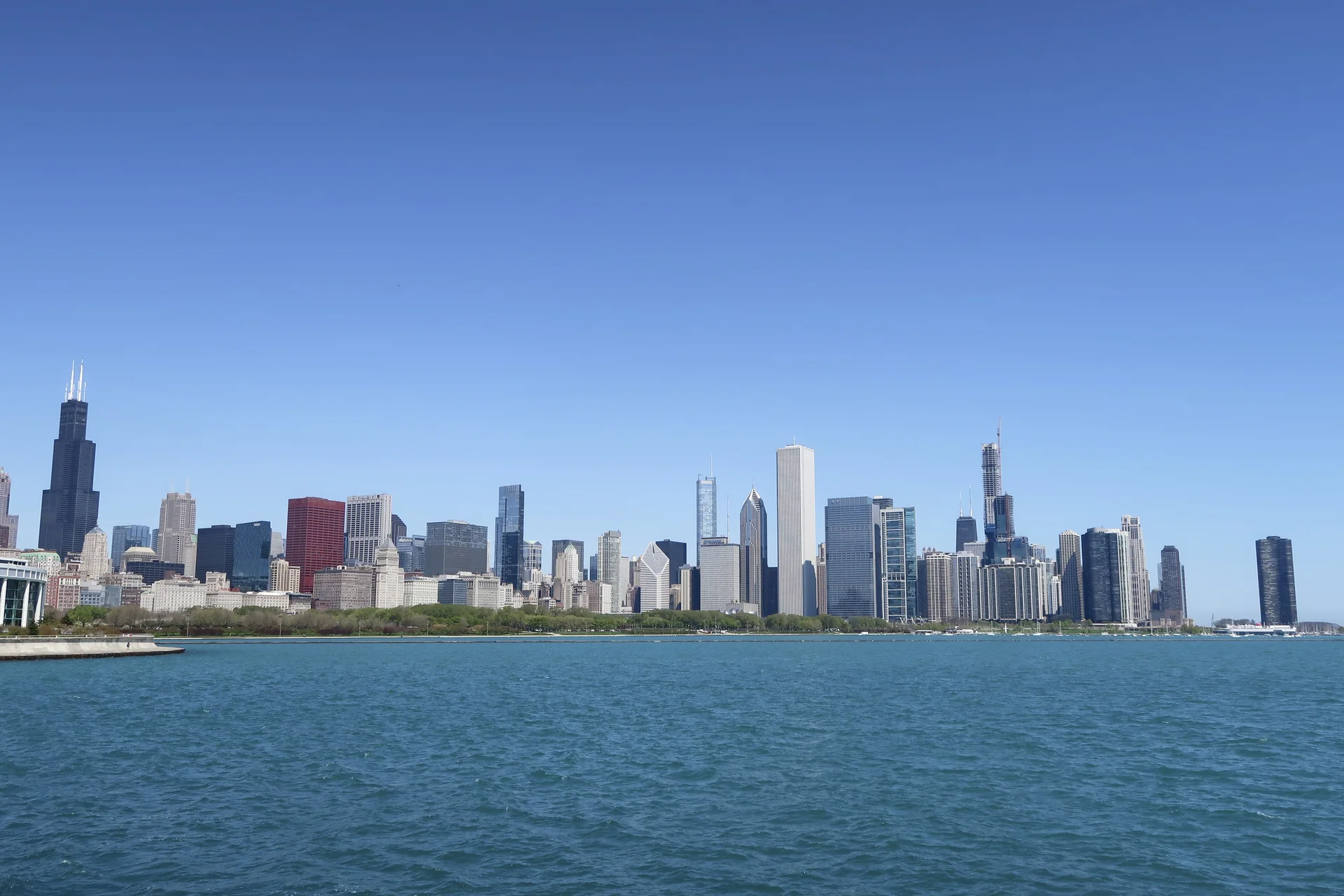
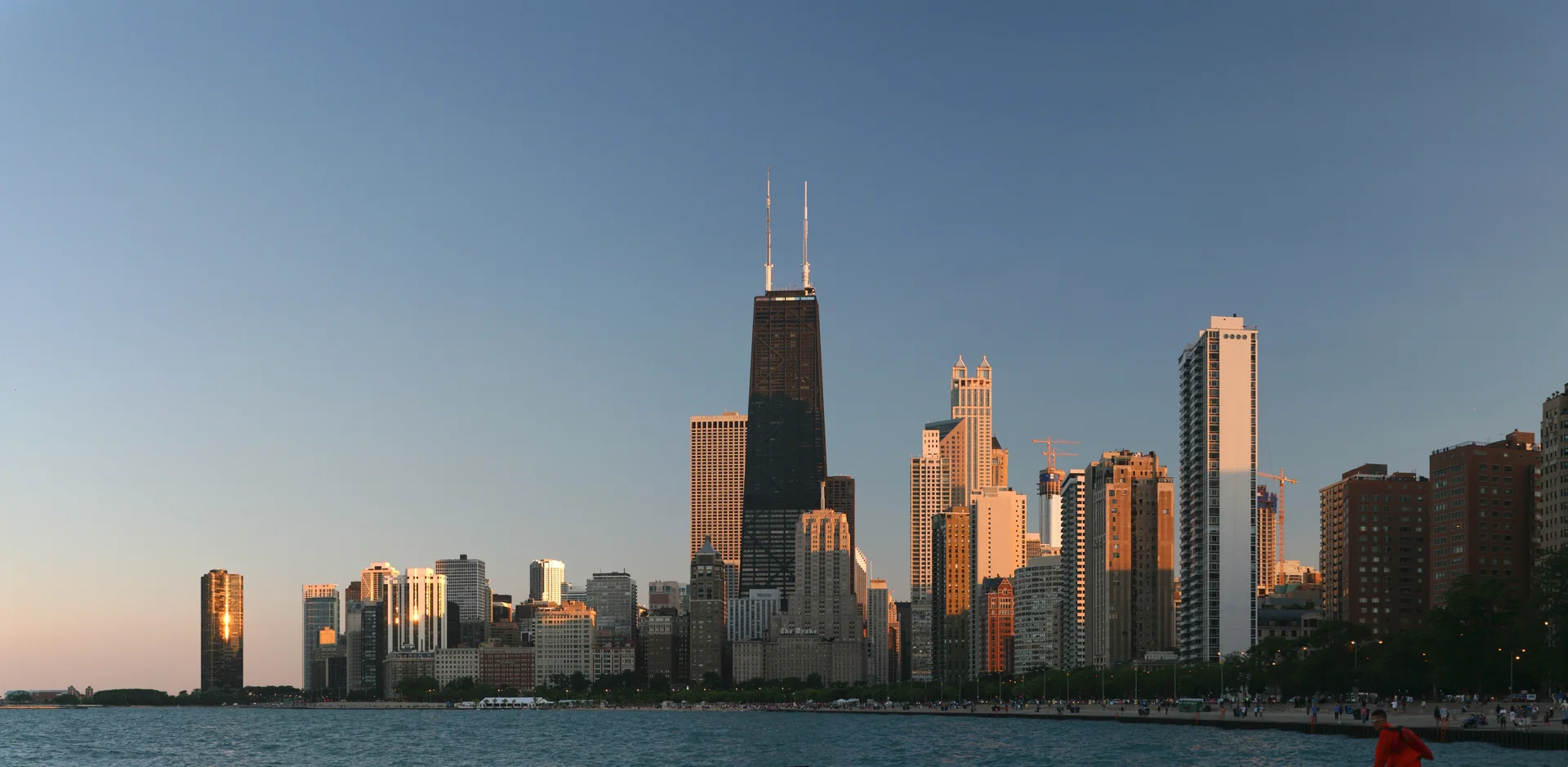
Lake Michigan changes Chicago’s scale. A few blocks from dense streets, the horizon opens and the city becomes a long edge of parks, beaches, harbors, paths, museums, and neighborhoods. The shoreline is too extensive for a single completion-minded day. Choose one section and combine movement with time to sit, look back, and adjust to the weather.
Pick a geographic anchor
A museum campus day differs from a North Side beach and park day or a South Side cultural and lakefront route. Choose the institution, neighborhood, or landscape that matters most, then build nearby rather than jumping between distant shoreline points. Check current transit access and remember that the closest stop on a map may still leave a substantial walk across a park.

Chicago Private Lakefront Sunset and Skyline Photo Tour
Enjoy a private, fully personalized sunset tour along Chicago’s scenic lakefront. Travel in comfort with your English-speaking driver, who shares in...
Treat weather as part of the route
Wind and temperature at the lake can differ from inland streets. Carry a layer, protect against sun when appropriate, and check authoritative forecasts. In winter, ice and exposed wind can change which paths are comfortable. In summer, heat, storms, and crowded beaches may suggest an earlier start or an indoor interval. An adaptable plan is stronger than a schedule that assumes perfect conditions.
Balance a large institution with open air
If a museum is the anchor, decide what you most want to see before entering. One focused visit followed by a long walk can be more satisfying than exhausting every gallery. If the landscape is the anchor, add one modest indoor stop or neighborhood meal as a weather alternative. Keep the two parts geographically connected.

Field Museum of Natural History Admission Tickets
Explore over 40 million artifacts, including SUE, the world’s largest, most complete T. rex ever discovered! Disco...

Skydeck - Willis Tower Admission
Gaze upon the city sights from the pinnacle of Chicago, the Skydeck. Located on the 103rd floor of Willis Tower, for...

Chicago River 90-Minute Architecture Tour
Be inspired by the captivating, visual art that is Chicago’s legendary architecture, and the exceptional architect...
Chicago Private Lakefront Sunset and Skyline Photo Tour
Enjoy a private, fully personalized sunset tour along Chicago’s scenic lakefront. Travel in comfort with your English-speaking driver, who shares in...
The lakefront is not simply a skyline viewpoint. It is habitat, recreation space, cultural landscape, transport corridor, and a boundary with its own history. Follow posted rules, protect planted areas, keep shared paths clear, and photograph people respectfully. A successful lakefront day should leave you with a sense of changing light and distance, not only a full camera roll.